
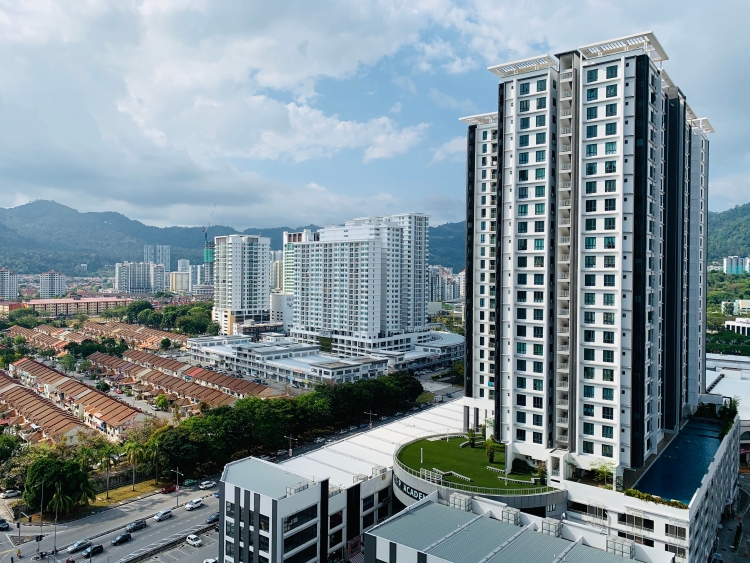
Vacant waqf land has the potential to become affordable housing
JOHOR BAHRU: Waqf land worth billions of ringgit that is still underutilized in Malaysia has the potential to be developed as affordable housing if a clear legal framework is established to enable long-term development without transferring ownership rights.
Real estate practitioner, Datuk Idzham Mohd Hashim, stated that the National Land Code needs to be amended to create a clear and uniform framework for long-term registered leases on waqf land.
He, who is also the President and Chief Executive Officer of Iskandar Investment Bhd (IIB), said that this approach allows the State Islamic Religious Council (MAIN) to retain ownership of waqf land indefinitely, while providing legal certainty to developers, home buyers, and financial institutions.
“The ownership rights of the land can and should remain with MAIN forever as required by Islamic waqf law,” he said in an article shared with Bernama.
Idzham stated that Malaysia has approximately 30,000 hectares of waqf land, with previous studies conservatively estimating the value of that holding at RM4 billion based on figures from 2015.
Citing data from the Department of Waqf, Zakat and Hajj (JAWHAR), he said that 3,018 out of 18,402 registered waqf lots nationwide remain unproductive or undeveloped as of July 2023.
He noted that estimates also indicate that the area of undeveloped waqf land could reach up to 87 percent of the total waqf land.
According to him, this issue is becoming increasingly important as the ability to own a home continues to be a challenge, while the cost of acquiring land remains one of the largest components in property development.
Idzham stated that the main obstacle does not lie in the principle of waqf, but rather in the absence of a clear mechanism that separates permanent land ownership from the economic rights to develop, occupy, and finance projects on that land.
Under the proposed approach, MAIN will continue to own the waqf land, while developers can carry out projects through long-term registered leases without disposing of the original waqf assets.
For General Waqf, which is land endowed for public welfare and interest, Idzham said this model can support the development of affordable housing as developers do not need to purchase land at current market prices.
This situation allows house prices to better reflect construction and development costs, while MAIN has the opportunity to generate long-term income through lease premiums to fund community and social programs.
For Special Waqf allocated for religious, charitable, or specific community purposes, he said mixed development that includes residential and commercial components can generate income to support facilities such as mosques and schools.
Idzham stated that the long-term lease structure for parent-owned land has already been implemented in several areas in Malaysia, including Johor, with registered lease interests granted to end buyers while the basic ownership remains with the parent landowner.
He also referred to the Court of Appeal’s decision in June 2025 that affirmed the validity of such arrangements under existing Malaysian land and strata law.
He noted that this decision provides a legal basis that can be adapted for the development of waqf land.
Idzham stated that a standardized waqf lease framework at the national level has the potential to unlock the economic and social potential of underutilized land, without compromising the permanent status of waqf land.
He said that Malaysia already has the land, demand, and legal precedents needed to realize this development model. – BERNAMA
KOMEN